

An affiliate link is a unique, trackable URL that identifies you as the source of a referral and credits you with a commission when someone clicks through and makes a purchase. The affiliate marketing industry supporting these links is projected to reach $36.9 billion by 2030, up from $15.7 billion in 2023. That growth reflects one clear reality: affiliate links are one of the most accessible revenue tools available to individuals and small businesses today. Programs like Amazon Associates, PartnerStack, and Shopify's affiliate program have made it possible for anyone with an audience to monetize their recommendations without owning a single product.
What is an affiliate link and how does it work?
An affiliate link is defined as a URL containing a unique identifier that connects a click or sale back to a specific affiliate. When you join a program, receive a link, and share it, the system tracks every visitor who arrives through your URL and attributes any resulting purchase to your account. The technical term used across the industry is "affiliate tracking link," though "affiliate link" is the widely accepted shorthand.
Every affiliate link is built from three core components. A base URL, a unique affiliate ID, and optional tracking parameters combine to form the complete link. The base URL points to the merchant's product page. The affiliate ID is your personal identifier within the program. The tracking parameters, often called UTM parameters or subIDs, add extra layers of data about the traffic source, campaign, or creative that generated the click.

Here is a simplified example. A standard Amazon Associates link might look like this: "amazon.com/product-page?tag=yourname-20. The tag=yourname-20` portion is the affiliate ID. Every click on that link tells Amazon exactly who sent the visitor, and if that visitor buys within the tracking window, you earn a commission.
How affiliate links track clicks and attribute commissions
The mechanics behind affiliate tracking are faster and more precise than most people realize. When a user clicks your link, they are redirected within 50 to 200 milliseconds while the system simultaneously logs the click and drops a tracking cookie in the user's browser. That speed means the redirect is invisible to the user, and the tracking happens in the background without friction.
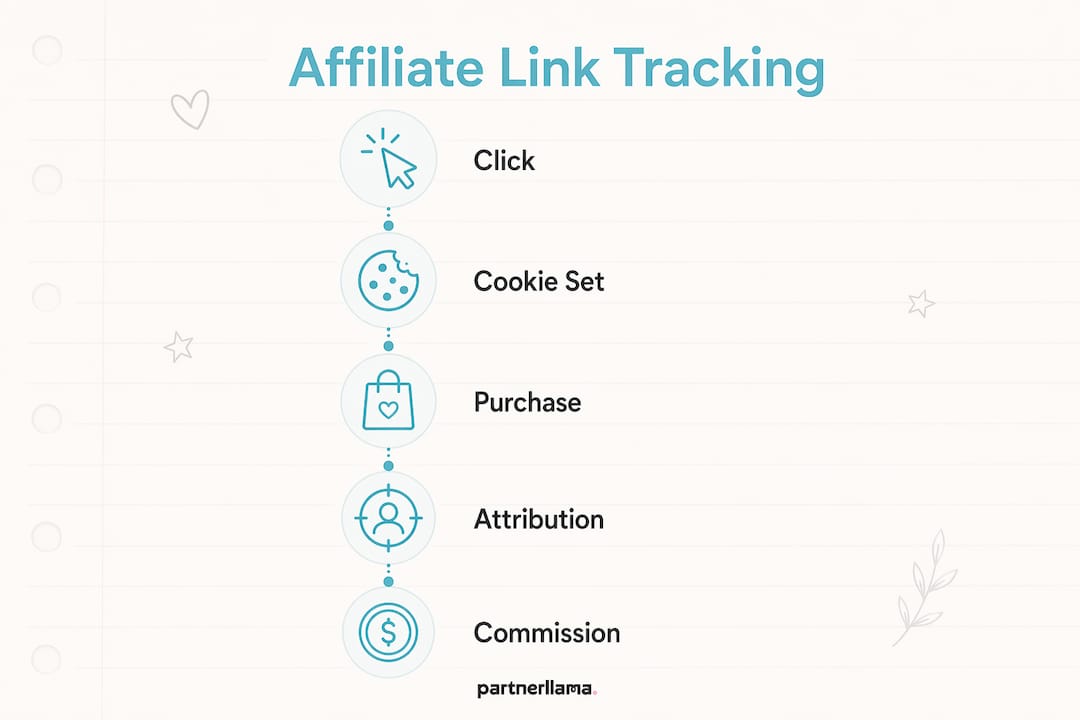
The cookie is the key to attribution. It stores your affiliate ID in the user's browser for a defined period, which varies by program. Some programs, like Amazon Associates, use a 24-hour cookie window. Others, like those running on PartnerStack or Impact, offer windows of 30, 60, or 90-plus days. A longer cookie window gives you more time to earn credit if the user returns to buy after their first visit.
Attribution models determine who gets paid when multiple affiliates are involved. The last eligible click model credits the commission to whichever affiliate's cookie was active at the moment of purchase. If a user clicked your link on Monday but clicked a competitor affiliate's link on Wednesday before buying on Friday, that competitor earns the commission. Understanding this model changes how you think about content timing and follow-up strategy.
Pro Tip: Check the cookie window of every program you join before investing time in promoting it. A 24-hour window like Amazon's requires buyers who are ready to purchase immediately, while a 90-day window gives you room to educate and nurture your audience before they convert.
The step-by-step commission flow works like this:
- You join an affiliate program and receive your unique link.
- You share the link in a blog post, social media post, email, or video.
- A user clicks the link and lands on the merchant's site.
- A cookie is placed in the user's browser.
- The user completes a purchase within the cookie window.
- The program records the conversion and attributes it to your affiliate ID.
- Your commission is added to your account for payout.
Affiliate links vs. referral links, deep links, and vanity URLs
Not every tracking link is an affiliate link, and confusing these types leads to poor program selection and missed revenue. The table below clarifies the key differences.
| Link type | Primary purpose | Who uses it | Typical example |
|---|---|---|---|
| Affiliate link | Third-party commission tracking | Content creators, publishers, marketers | Amazon Associates, PartnerStack partners |
| Referral link | Customer-to-customer sharing with perks | Existing customers | Dropbox "give 500MB, get 500MB" |
| Deep link | Direct users to a specific page with tracking | Affiliates, app marketers | Link to a specific product SKU or app screen |
| Vanity URL | Branded, readable redirect for trust and recall | Brands, influencers | yoursite.com/recommend/toolname |
Affiliate links focus on third-party partnerships where an external publisher earns a commission. Referral links typically involve existing customers who share with friends in exchange for account credits or discounts. Deep links are a subset of affiliate links that skip the homepage and send users directly to a specific product, category, or checkout page. This matters because sending traffic to a relevant page instead of a generic homepage consistently improves conversion rates.
Vanity URLs, sometimes called cloaked links, replace long parameter-heavy affiliate URLs with clean branded links. A link like yoursite.com/go/shopify is far more trustworthy to a reader than a string of random characters and tracking codes. Many affiliates use tools like ThirstyAffiliates or Pretty Links to manage this process at scale.
Benefits of affiliate links for individuals and small businesses
The core appeal of affiliate links is straightforward: you earn money by recommending products you already use or believe in, without building, stocking, or shipping anything. For small business owners and content creators, this creates a revenue stream that runs parallel to your primary work.
The specific benefits include:
- No product ownership required. You promote existing products from merchants like Shopify, ConvertKit, or Semrush and earn a percentage of every sale you drive.
- Multiple income streams from one audience. You can join several programs simultaneously and place relevant links across blog posts, YouTube descriptions, newsletters, and social profiles.
- Scalable without proportional effort. A blog post written once can generate commissions for years if it ranks in search and continues attracting traffic.
- Low barrier to entry. Amazon Associates accepts new applicants with minimal traffic requirements. PartnerStack hosts dozens of SaaS programs that welcome small publishers.
- Performance data you can act on. Every click and conversion is tracked, so you know exactly which content drives revenue and which does not.
Building trust through authentic content is the single most reliable driver of affiliate conversions. Readers who trust your recommendations click your links at higher rates and complete purchases more often than audiences who sense a purely transactional motive. This is why honest reviews, tutorials, and comparison posts consistently outperform generic promotional content in affiliate marketing.
Pro Tip: Disclose your affiliate relationships clearly and early in every piece of content. The FTC requires it, and transparency actually increases click rates because it signals honesty rather than hiding a commercial relationship.
For small businesses specifically, affiliate links also offer a way to align your content with audience needs by recommending tools and services that solve the exact problems your readers face.
Common challenges and how to optimize affiliate link performance
Affiliate links come with real technical and strategic risks that beginners rarely anticipate. Knowing these challenges upfront saves you from losing commissions you legitimately earned.
- Link hijacking. Approximately 17% of affiliate commissions are lost monthly because malicious browser extensions or scripts replace your affiliate ID with someone else's before the click registers. This is not a rare edge case. It is a consistent drain on earnings that requires active countermeasures.
- Suspicious-looking URLs. Long affiliate links filled with tracking parameters look untrustworthy to readers. Link cloaking improves trust and click-through rates by replacing those URLs with clean, branded redirects. Tools like ThirstyAffiliates handle this automatically for WordPress users.
- No subID tracking. Without subIDs, you cannot tell whether your commissions came from a blog post, an email campaign, or a social media post. SubIDs let you track which creative or region drives conversions, which is the difference between guessing and knowing where to invest your time.
- Cookie blocking and privacy changes. Safari's Intelligent Tracking Prevention and Firefox's Enhanced Tracking Protection shorten or block third-party cookies. Some programs have shifted to server-side tracking or first-party cookies to compensate. Check whether your programs use modern affiliate tracking technology that accounts for these browser restrictions.
- Last-click attribution blind spots. If you introduce a product to a reader but another affiliate captures the final click, you earn nothing. Diversifying your content types and using email follow-ups to maintain contact with your audience reduces the chance of losing attribution to a competitor.
The practical solution for most beginners is to use a link management tool from day one, set up subIDs for every major traffic source, and audit your affiliate dashboards monthly to catch unexplained drops in conversion rates.
Key takeaways
Affiliate links are trackable URLs that connect your referrals to commissions, and understanding their technical structure, attribution rules, and optimization practices determines whether you earn consistently or leave money on the table.
| Point | Details |
|---|---|
| Affiliate link definition | A unique URL containing your affiliate ID that tracks clicks and attributes commissions to your account. |
| Cookie windows matter | Windows range from 24 hours to 90-plus days; longer windows give you more time to convert your audience. |
| Last-click attribution | The final affiliate cookie active before purchase gets the commission, not the affiliate who introduced the product. |
| Link hijacking is real | Around 17% of commissions are lost monthly to hijacking; use cloaking tools and secure link management practices. |
| Trust drives conversions | Authentic reviews and transparent disclosures consistently outperform promotional content in affiliate click and conversion rates. |
Why most beginners underestimate what an affiliate link actually does
I have reviewed hundreds of affiliate setups for small businesses and content creators, and the pattern is almost always the same. People treat an affiliate link as just a URL. They paste it into a post, forget about it, and wonder why commissions are inconsistent or missing entirely.
The reality is that an affiliate link is a data collection instrument. Every click tells you something: which content resonates, which audience segment converts, which traffic source is worth your time. When you ignore subIDs, skip link cloaking, and never check your attribution reports, you are flying blind in a system designed to give you precise feedback.
What I find most underappreciated is the relationship between cookie windows and content strategy. A creator writing in-depth comparison guides for high-consideration purchases needs a program with a 60-plus day cookie window. Someone running a deal-focused newsletter needs a program where buyers act fast. Matching your content format to the right program's attribution model is a decision most beginners never make deliberately. They just pick Amazon because it is familiar, then wonder why their conversion rate is low.
The other thing worth saying plainly: affiliate marketing rewards patience and specificity. A single well-researched post targeting a specific buyer intent, with the right program, the right cookie window, and a trusted voice behind it, will outperform ten generic "best products" roundups every time. Start with one program, learn its tracking system thoroughly, and build from there.
— Isabel
Turn your affiliate traffic into lasting revenue with PartnerLlama
Getting affiliate links placed is only the first step. The brands and creators who generate consistent affiliate revenue are the ones who convert that initial click into a long-term customer relationship. PartnerLlama's lifecycle email marketing for affiliate traffic is built specifically for this: automated sequences that engage new visitors, nurture undecided buyers, and re-activate lapsed customers. If you are running an affiliate program or building one from scratch, PartnerLlama also offers full affiliate marketing management services that cover tracking, partner activation, and performance optimization from day one.
FAQ
What is an affiliate link in simple terms?
An affiliate link is a special URL that contains your unique ID, so when someone clicks it and buys a product, the merchant knows you sent them and pays you a commission.
How do affiliate links earn money?
When a user clicks your affiliate link and completes a purchase within the program's cookie window, the tracking system attributes the sale to your account and adds a commission, which is paid out on a set schedule.
What is the difference between an affiliate link and a referral link?
An affiliate link is used by third-party publishers to earn commissions from a merchant's program, while a referral link is typically shared by existing customers in exchange for account credits or discounts rather than cash commissions.
How long does an affiliate link cookie last?
Cookie windows vary by program. Amazon Associates uses a 24-hour window, while programs on platforms like PartnerStack or Impact commonly offer 30 to 90-plus day windows depending on the merchant's settings.
Can affiliate links be stolen or hijacked?
Yes. Around 17% of affiliate commissions are lost monthly due to link hijacking by malicious browser scripts. Using link cloaking tools and regularly auditing your affiliate dashboard are the most effective defenses against this.