

Influencer marketing is defined as a brand partnership strategy where companies collaborate with social media creators who hold audience trust to promote products, drive awareness, and generate sales. The industry term is "influencer marketing," and it has moved well beyond celebrity endorsements into a structured, performance-driven discipline. The global market is forecasted to reach $13.7 billion by 2027, with 66% of marketers using it for brand awareness and 55% for revenue growth. Research shows 58% of consumers have purchased a product after seeing an influencer endorse it. That conversion rate explains why brands across every category are building influencer programs as core revenue channels, not optional experiments.
What does influencer marketing mean in practice? Influencer tiers explained
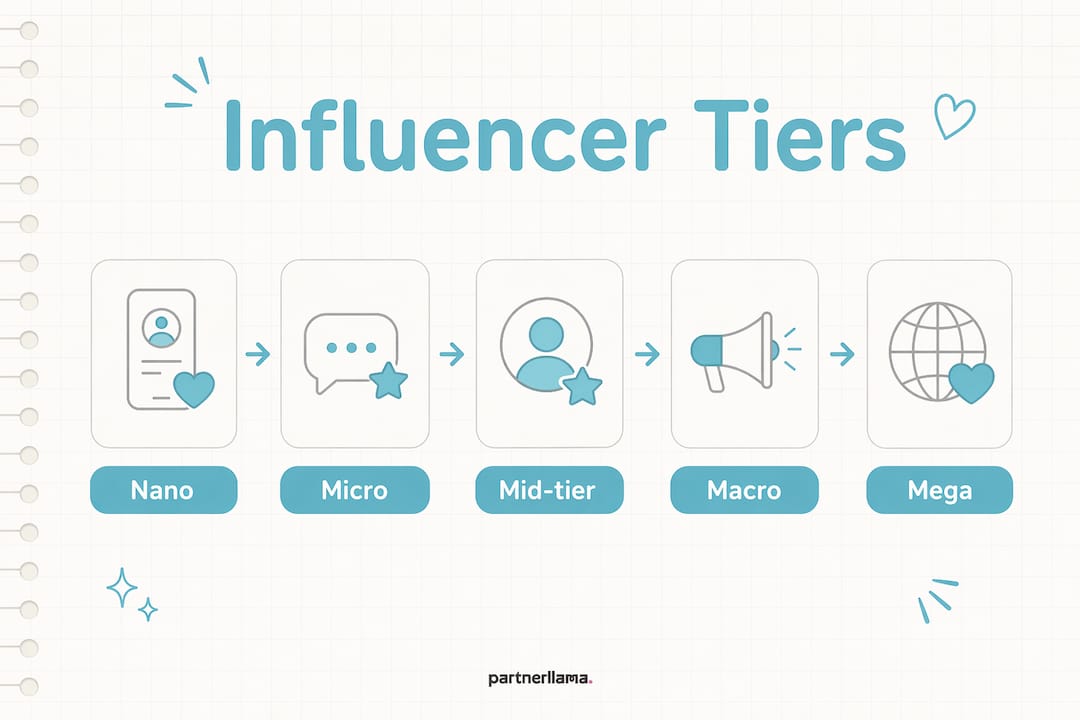
Influencer marketing works through a tiered system based on follower count, audience type, and cost per post. Each tier serves a different campaign goal, and choosing the wrong tier is one of the most common budget mistakes marketers make.
The five tiers break down as follows:
- Nano influencers (1,000–10,000 followers): Cost roughly $50–$500 per post. They have tight-knit, highly engaged communities and work well for local or niche product launches.
- Micro influencers (10,000–100,000 followers): Cost $500–$5,000 per post. They balance reach with genuine audience trust, making them the most requested tier for direct-to-consumer brands.
- Mid-tier influencers (100,000–500,000 followers): Cost $5,000–$25,000 per post. They offer broader reach while still maintaining category authority.
- Macro influencers (500,000–1,000,000 followers): Cost $25,000–$100,000 per post. Best for national campaigns with large media budgets.
- Mega influencers (1,000,000+ followers): Cost $100,000 to over $1,000,000 per post. This tier includes celebrities and is typically reserved for brand awareness at scale.
Nano and micro influencers consistently achieve higher engagement rates than mega influencers, often delivering stronger return on investment despite smaller audiences. The reason is simple: their followers treat their recommendations like advice from a trusted friend, not a paid advertisement.
Pro Tip: Before selecting a tier, define your primary goal. If you need conversions, micro and nano influencers outperform on engagement. If you need reach for a product launch, mid-tier and macro influencers cover more ground faster.

Tier selection also shapes your content strategy. Nano and micro creators tend to produce more authentic, unpolished content that resonates with their communities. Macro and mega influencers often deliver higher production value but less personal connection. Neither approach is universally better. The right choice depends on your category, budget, and campaign objective.
How does influencer marketing work? Compensation models and contracts
Brands compensate influencers through four primary models, and the structure you choose affects both cost and influencer behavior.
The four main compensation types are:
- Flat fee: A fixed payment per post or campaign deliverable. This is the most common model and gives brands predictable costs.
- Affiliate or performance pay: The influencer earns a commission on sales they drive, typically tracked through a unique link or promo code. This model aligns incentives directly with revenue.
- Product gifting: The brand sends free products in exchange for coverage. This works best with nano and micro influencers and is common in beauty, food, and lifestyle categories. PartnerLlama's influencer gifting guide covers how to structure gifting programs that generate consistent content without inflating costs.
- Hybrid models: A combination of flat fee plus affiliate commission. This structure rewards influencers for both content creation and sales performance, making it the preferred model for brands running long-term programs.
Cost ranges vary significantly by tier. A mid-tier influencer charging $10,000 per post on a flat fee model may deliver less measurable value than a micro influencer earning $1,000 plus a 10% commission on tracked sales. The affiliate and influencer hybrid approach is gaining ground precisely because it ties compensation to outcomes rather than impressions.
Contracts are non-negotiable in any professional influencer program. A proper agreement must cover usage rights, exclusivity periods, disclosure requirements, and content approval timelines. Skipping this step creates legal exposure and often leads to content that violates Federal Trade Commission guidelines on paid endorsements.
Pro Tip: Always specify in your contract whether you are buying reach and endorsement or buying content assets for your own media channels. These are two different things with different pricing, rights, and legal implications.
What challenges does influencer marketing face?
Consumer trust is the central challenge in influencer marketing, and the data is direct. 26% of consumers distrust influencer marketing, compared to only 11% who distrust traditional advertising. That gap exists because audiences can detect when an endorsement feels transactional rather than genuine.
The trust problem does not make influencer marketing ineffective. It makes authenticity the most important variable in campaign design. Brands that brief influencers with rigid scripts and heavy brand language consistently underperform compared to brands that give creators room to speak in their own voice.
"92% of consumers trust recommendations from individuals over direct brand messaging." — eMarketer, 2026
That statistic explains why influencer marketing works at all. The mechanism is borrowed trust. When a creator recommends your product, their audience applies the same credibility they would give a friend's recommendation. That borrowed trust evaporates the moment the content feels forced or the disclosure is buried.
Three practices protect authenticity in influencer programs:
- Transparent disclosures: FTC guidelines require clear labeling of paid partnerships. Audiences respond better to honest disclosures than to hidden sponsorships that get exposed later.
- Creator-led briefs: Provide context and key messages, but let the influencer determine how to communicate them. Scripted content reads as scripted.
- Long-term relationships: One-off posts generate awareness. Repeated, genuine endorsements over months build the kind of trust that converts. Building trust in influencer partnerships is especially critical in regulated categories like health and wellness, where credibility directly affects purchase decisions.
How to implement influencer marketing strategies that drive growth
Effective influencer marketing strategy starts with the three R's: relevance, reach, and resonance. These three criteria determine whether an influencer will actually move your audience or simply generate impressions that go nowhere.
Follow this sequence when building or improving an influencer program:
- Define your goal first. Brand awareness, product launches, and direct sales each require different influencer types, content formats, and success metrics. Mixing goals without separating them by campaign leads to muddled results.
- Select influencers by audience fit, not follower count. An influencer with 30,000 highly engaged followers in your exact product category will outperform a macro influencer with 800,000 general lifestyle followers. Relevance beats raw reach.
- Distinguish influencer marketing from creator-generated content (CGC). Influencer marketing buys reach and endorsement. CGC buys content assets you can repurpose across your own channels. Both have value, but conflating them in a contract creates disputes over usage rights and compensation.
- Use whitelisting to extend content reach. Whitelisting allows brands to run paid ads using an influencer's account, combining the creator's credibility with the brand's media budget. This technique significantly extends the life of high-performing influencer content.
- Integrate influencer activity with affiliate tracking. Assigning unique tracking links or promo codes to each influencer gives you clean attribution data. Without it, you cannot measure which creators actually drive revenue versus which ones only drive clicks.
- Prioritize digitally native creators for long-term programs. Modern influencer marketing favors creators who have built genuine communities around specific interests. These creators maintain active engagement with their audiences and produce content that feels native to the platform, not imported from a brand brief.
- Review and renew partnerships based on performance data. Influencer programs that run on autopilot without quarterly performance reviews waste budget on underperforming creators. Set clear KPIs at the start and hold every partnership accountable to them.
Key Takeaways
Influencer marketing works when brands match the right creator tier to the right campaign goal, structure compensation to reward performance, and protect authenticity through transparent contracts and creator-led content.
| Point | Details |
|---|---|
| Market scale | The influencer marketing industry is forecasted to reach $13.7 billion by 2027. |
| Tier selection matters | Nano and micro influencers deliver higher engagement rates than mega influencers despite smaller audiences. |
| Compensation shapes outcomes | Hybrid models combining flat fees with affiliate commissions align incentives and improve measurable ROI. |
| Trust is the core variable | 26% of consumers distrust influencer marketing; authenticity and transparent disclosures close that gap. |
| Strategy requires the three R's | Relevance, reach, and resonance are the core criteria for selecting influencers who actually convert. |
The shift I keep watching in influencer marketing
The most significant change I have seen in influencer marketing over the past few years is not the rise of short-form video or the explosion of creator platforms. It is the collapse of the celebrity model as the default choice.
Brands spent years paying enormous flat fees to celebrities with millions of followers and getting disappointing conversion data in return. The audiences were real, but the trust was not. Followers of major celebrities often engage with content passively. They watch, they like, they move on. They do not buy.
The brands that are winning now are the ones that treat influencer marketing as community access, not media buying. A nano influencer with 8,000 followers in the running community who posts about your hydration product three times over six months will consistently outperform a celebrity post seen by 2,000,000 people once. The math is counterintuitive until you account for trust.
The other mistake I see constantly is confusing influencer marketing with CGC. They are not the same thing, and treating them as interchangeable creates real legal and financial problems. If you want content assets you can run as ads, pay for CGC rights explicitly. If you want reach and endorsement, structure an influencer deal. Trying to get both for the price of one is where most disputes originate.
My honest advice: start smaller than you think you need to. Run three to five micro influencer partnerships with proper tracking before you commit to a macro budget. The data you collect in that first phase will tell you more about your audience than any media plan.
— Isabel
How PartnerLlama builds influencer programs that perform
Running an influencer program well requires more than finding creators and sending product. It requires a system that covers selection, contracting, activation, tracking, and long-term performance management.
PartnerLlama manages the full influencer program lifecycle for DTC and SaaS brands, from initial creator recruitment through ongoing performance optimization. Every program is built around measurable outcomes, not vanity metrics. PartnerLlama's influencer program management service integrates influencer activity with affiliate tracking and lifecycle marketing to create a connected revenue system. Brands that want to move from scattered one-off campaigns to a repeatable, data-driven influencer channel can explore PartnerLlama's affiliate and influencer marketing solutions to see how both channels work together.
FAQ
What does influencer marketing mean?
Influencer marketing is a brand partnership strategy where companies work with social media creators to promote products to their engaged audiences. The goal is to borrow the creator's audience trust to drive brand awareness and sales.
How do influencer tiers affect campaign results?
Nano and micro influencers typically deliver higher engagement rates and stronger conversion performance than macro or mega influencers. Tier selection should match your campaign goal and budget rather than defaulting to the largest possible audience.
What compensation models do brands use for influencers?
Brands pay influencers through flat fees, affiliate commissions, product gifting, or hybrid combinations. Hybrid models that combine a base fee with performance-based commissions are increasingly preferred because they tie pay to measurable results.
Why do consumers distrust influencer marketing?
26% of consumers distrust influencer marketing compared to 11% for traditional advertising. The gap closes when brands prioritize authentic creator voices, transparent disclosures, and long-term partnerships over scripted one-off posts.
What is the difference between influencer marketing and CGC?
Influencer marketing buys reach and endorsement through a creator's audience. Creator-generated content (CGC) buys content assets the brand can use in its own media channels. Contracts must specify which type of arrangement applies to avoid usage rights disputes.